AU to USD: Simple Guide to Australian Dollar to US Dollar Conversion
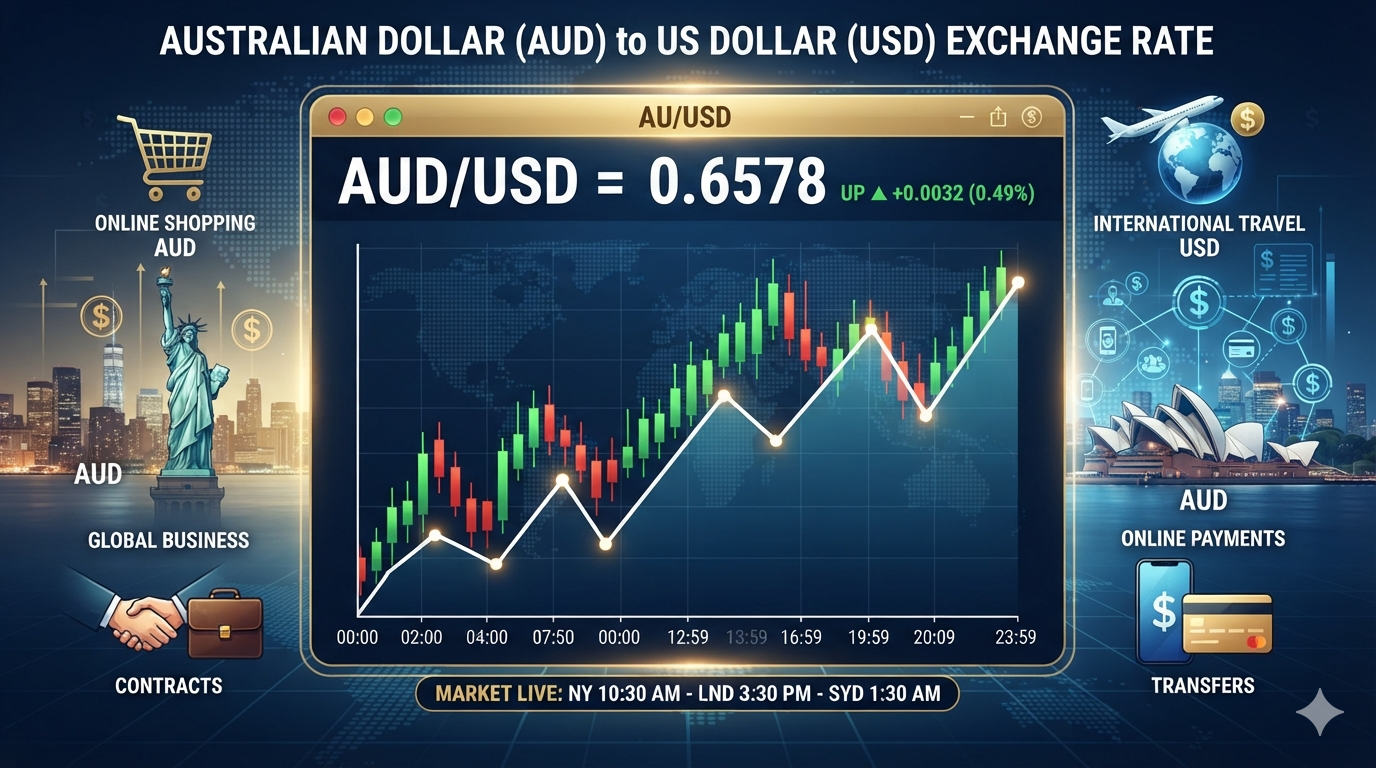
The AU to USD exchange rate tells you how much one Australian dollar is worth in US dollars. It is useful for shopping, travel, business, online payments, and international transfers. The Australian dollar is often written as AUD, while the US dollar is written as USD. Their value changes throughout the day as global currency markets move.
Understanding currency conversion does not need to be difficult. You only need the current exchange rate and the amount you want to convert. However, the rate shown online may not be the final amount you receive. Banks, payment services, and money transfer companies can add fees or exchange-rate margins. This guide explains the process in simple terms. It also covers examples, important factors, common mistakes, and ways to get better value when exchanging Australian dollars.
What Does AU to USD Mean?
AU to USD means converting Australian dollars into United States dollars. For example, imagine the current exchange rate is 1 AUD = 0.65 USD. In that case, A$100 would equal about US$65 before fees or other charges. The actual rate can change at any time.
The term AU is commonly used when discussing Australian currency. The official currency code is AUD. USD is the international code for the United States dollar. You may see these codes on banking apps, currency websites, invoices, and payment platforms. Knowing the correct codes helps avoid confusion when sending money internationally. It is also important to check whether a website shows the buying rate, selling rate, or mid-market rate. These rates can differ. Always check the final amount before confirming a currency exchange.
How Does AU to USD Conversion Work?
AU to USD conversion uses an exchange rate between two currencies. The basic calculation is simple. You multiply the amount in Australian dollars by the current AUD/USD rate.
For example, suppose you have A$500 and the rate is 0.65. You can calculate the conversion like this: 500 × 0.65 = US$325. This is only an example. The real exchange rate may be higher or lower when you make the transaction. Some providers also charge a fixed fee. Others include a markup inside their exchange rate. Therefore, the amount shown by a simple currency calculator may differ from your final payment. Before exchanging money, compare both the rate and the total fees. This gives you a better idea of the true cost.
AU to USD Conversion Table
The following table shows how different Australian dollar amounts could convert using an example rate of 1 AUD = 0.65 USD. These numbers are examples, not live rates.
| Australian Dollars (AUD) | Example Rate | US Dollars (USD) |
|---|---|---|
| A$1 | 0.65 | US$0.65 |
| A$10 | 0.65 | US$6.50 |
| A$25 | 0.65 | US$16.25 |
| A$50 | 0.65 | US$32.50 |
| A$100 | 0.65 | US$65.00 |
| A$250 | 0.65 | US$162.50 |
| A$500 | 0.65 | US$325.00 |
| A$1,000 | 0.65 | US$650.00 |
| A$2,500 | 0.65 | US$1,625.00 |
| A$5,000 | 0.65 | US$3,250.00 |
| A$10,000 | 0.65 | US$6,500.00 |
This table makes the calculation easier to understand. However, exchange rates move constantly. The actual amount can therefore change between checking the rate and completing your transaction. For large transfers, even a small rate difference can make a noticeable difference. It is wise to check the latest rate immediately before exchanging money.
Why Does the AUD to USD Rate Change?
The AU to USD rate changes because currency markets respond to many economic and political factors. Interest rates are one major influence. When Australian interest rates rise relative to US rates, demand for Australian dollars can sometimes increase. The opposite may also happen when US rates become more attractive.
Commodity prices are another important factor for Australia. Australia exports products such as iron ore, coal, and other resources. Changes in global demand can affect the Australian economy and its currency. Market confidence also matters. Investors constantly assess economic data, inflation, employment, trade, and central bank decisions. Global events can create sudden currency movements as well. Because of these factors, there is no permanently fixed AUD/USD rate. A rate that looks attractive today may change tomorrow.
What Is the Mid-Market Exchange Rate?
The AU to USD mid-market rate is the middle point between the buying and selling prices in the currency market. It is often used as a useful reference rate when comparing exchange services.
Banks and payment providers may not give customers the exact mid-market rate. Instead, they may add a margin to the rate. This margin can increase the cost of your transaction. Some providers advertise low fees but use a less favorable exchange rate. Others may charge a visible transfer fee while offering a stronger rate. That is why looking at only the advertised fee can be misleading. Compare the final amount of USD you will receive. This provides a clearer picture of the actual cost. For larger transfers, even a small percentage difference can become significant.
How to Convert AUD to USD Manually
Calculating AU to USD manually is easy when you know the exchange rate. Start by finding the current rate. Then multiply your Australian dollar amount by that rate.
For example, if the rate is 0.65 and you want to convert A$200, use this calculation: 200 × 0.65 = US$130. If you have A$2,000, the same rate gives US$1,300. Remember that these examples exclude transaction fees and provider margins. If the provider uses a different rate, your final amount will change. For reverse conversion, the calculation works differently. You divide the US dollar amount by the AUD/USD rate. Learning both methods helps you quickly check currency calculations. It can also help you identify unusual quotes before making an international payment.
AU to USD for Online Shopping
AU to USD conversion is common when Australians purchase products from US-based websites. A product listed at US$100 may cost more than A$100 after conversion. Your card provider converts the transaction using its applicable exchange rate.
Some cards also charge a foreign transaction fee. This fee can increase the final cost. Before making a purchase, check your card’s international transaction terms. A website may also display prices in different currencies. Choosing the wrong payment currency can sometimes lead to an additional conversion charge. It is useful to compare the checkout amount with the current market rate. This simple step can help you understand what you are actually paying. For expensive purchases, checking currency costs before checkout can make a meaningful difference.
AU to USD for Travel
Travelers often need AU to USD conversion when visiting the United States. You may need US dollars for hotels, transport, meals, shopping, and other expenses. Carrying some cash can be useful, but cards are widely used for many everyday purchases.
Before traveling, check your bank’s international fees. ATM withdrawals may include additional charges. Some ATMs can also offer currency conversion directly. This option may use a less favorable exchange rate. If an ATM asks whether you want to pay in Australian dollars or US dollars, check the offered rate carefully. Paying in the local currency can often avoid certain dynamic currency conversion markups. Planning ahead can reduce unnecessary costs. It also gives you a better idea of your travel budget.
Factors That Affect the AUD and USD
Several economic factors influence the AU to USD relationship. Interest rates are among the most important. Decisions by the Reserve Bank of Australia and the US Federal Reserve can affect currency demand.
Inflation is another major factor. High inflation can reduce a currency’s purchasing power. Employment data, economic growth, government policies, and trade figures can also influence investor confidence. Commodity prices can be especially relevant to the Australian economy. Global risk sentiment matters too. During periods of uncertainty, investors may move money toward assets they consider safer. This can influence demand for major currencies. Because many factors work together, it is difficult to predict currency movements with certainty. Anyone exchanging a large amount should consider current market conditions instead of relying on an old exchange rate.
Why Exchange Rates Differ Between Providers
You may notice different AU to USD rates across banks, apps, card providers, and money transfer services. This is normal. Currency providers have different pricing models.
One company may advertise a low transfer fee but offer a weaker exchange rate. Another may charge a small fee but provide a rate closer to the market rate. Some services also use different rates for cash exchange, card payments, and international transfers. Timing can create differences too because currency markets continue moving. When comparing providers, focus on the final amount received rather than one headline number. For example, if two providers quote different rates, calculate how many US dollars you will actually receive after every fee. This approach gives you a more accurate comparison.
Common Mistakes When Converting AUD to USD
One common mistake is using an old exchange rate. Currency prices can change quickly, so historical rates may not represent today’s value. Another mistake is ignoring hidden fees. A provider can offer a competitive-looking rate while adding a large service charge.
People also sometimes confuse AUD/USD with USD/AUD. These are opposite currency pairs. If 1 AUD equals 0.65 USD, then 1 USD equals approximately 1.54 AUD. The numbers are not interchangeable. Another mistake is assuming the online rate will always match the bank’s rate. Providers usually apply their own pricing. Before confirming a transaction, review the exchange rate, service fee, and final amount. This small check can prevent expensive surprises.
How to Get Better Value When Exchanging Currency
To get better value from AU to USD exchanges, compare several providers before transferring money. Look at the complete transaction cost. Do not focus only on the advertised fee.
For larger transfers, even a small exchange-rate improvement can matter. You can also monitor the rate and choose a suitable time when your transaction is flexible. However, trying to perfectly predict the currency market is difficult. Avoid making financial decisions based only on short-term predictions. If you need money for a fixed payment, certainty may be more important than waiting for a better rate. For regular international payments, comparing providers regularly can help. Always check the provider’s current rate before completing the transaction. The rate shown in a search result may not be the rate you receive.
AU to USD and International Money Transfers
AU to USD transfers are useful for sending money between Australia and the United States. People use international transfers for family support, education, business payments, property costs, and personal expenses.
The total cost depends on several factors. These include the exchange rate, transfer fee, payment method, and receiving bank charges. Transfer speed can also vary. Some services offer fast transfers but charge more. Others provide lower costs with slower processing. Before sending money, confirm the recipient’s details carefully. Check the final USD amount and any possible receiving charges. For large transactions, keep records of the transfer. This helps with budgeting and future comparisons. You should also use reputable financial services and follow their verification requirements.
Understanding AUD/USD Market Trends
The AU to USD market can move higher or lower based on economic expectations. Traders often watch interest-rate decisions, inflation reports, employment figures, and economic growth data.
A stronger Australian dollar means each AUD buys more USD. A weaker Australian dollar means each AUD buys fewer USD. However, market movements are not always easy to explain from one event. Currency prices reflect expectations about future conditions. This means the market can move before an official announcement. If you are exchanging money for a real purchase, focus on the rate you can actually obtain. Avoid assuming that a short-term market move will continue. For long-term planning, using a realistic range can be more useful than relying on one predicted exchange rate.
How Businesses Use AUD to USD Conversion
Businesses may need AU to USD conversion when importing goods, paying US suppliers, receiving customer payments, or managing international expenses. Currency changes can affect profit margins.
For example, an Australian company buying products from a US supplier may need to pay in USD. If the Australian dollar falls, the same US invoice may cost more in AUD. Businesses can manage this risk through careful budgeting and appropriate currency strategies. They may also compare payment providers to reduce conversion costs. Companies with frequent international transactions often monitor exchange rates closely. Good records are important too. Tracking the original amount, exchange rate, fees, and final payment helps businesses understand their true international costs.
Frequently Asked Questions
1. What does AU to USD mean?
AU to USD means converting Australian dollars into United States dollars. AUD is the official currency code for the Australian dollar. USD represents the United States dollar. The conversion amount depends on the current exchange rate.
2. How can I calculate Australian dollars in US dollars?
Multiply your AUD amount by the current AUD/USD exchange rate. For example, using an example rate of 0.65, A$100 would equal US$65 before fees. Always check the current rate before making a transaction.
3. Is the online exchange rate the final rate?
Not always. Banks and money transfer providers may add a markup or service fee. Your final amount can therefore differ from the displayed market rate. Always review the complete transaction cost.
4. Why does the AUD/USD rate change?
The rate changes because of interest rates, inflation, economic data, commodity prices, market sentiment, and global events. Central bank decisions can also create significant movements.
5. Is AUD the same as AU?
No. AUD is the official three-letter currency code for the Australian dollar. AU is commonly used as an abbreviation for Australia. When checking currency prices, AUD is the more precise term.
6. Should I exchange currency immediately?
It depends on your needs and timing. If you have a payment due soon, certainty may be more useful than waiting. For flexible transactions, comparing rates from reputable providers can help you find better value.
Conclusion
The AU to USD exchange rate is important for travel, shopping, transfers, and international business. The basic calculation is simple, but the final cost depends on more than the market rate. Provider margins, transaction fees, and payment methods can all affect the amount you receive.
The best approach is to check the latest rate and compare the complete cost. Avoid relying on old conversion tables or headline rates alone. If you understand AUD, USD, exchange rates, and provider fees, you can make more informed decisions. Currency markets can change quickly, so always verify the current rate before completing an important transaction.